Daily Foot Care Checklist for Neuropathy
Disclosure: this page contains affiliate links (ClickBank). If you buy through them we may earn a commission at no extra cost to you. Educational content only, not medical advice.
A daily foot care checklist matters more with neuropathy than with almost any other condition, for one simple reason: the usual warning system — pain — often isn’t working properly. A blister, a cut, or the start of an ulcer can sit unnoticed for days when the feet have lost sensation, and what would be a minor issue for most people can turn into a serious one before it’s ever felt. A short daily routine closes that gap.
None of this needs to take more than five minutes. The goal isn’t perfection, it’s consistency — the same few checks, done the same way, often enough that a change stands out immediately.
Why This Matters More With Neuropathy
Reduced sensation means the body’s normal early-warning system — discomfort that makes you shift your weight, take a shoe off, or notice a stone before it does damage — is unreliable or absent. Combine that with poor circulation, which is common alongside diabetic neuropathy, and small injuries heal more slowly and are more prone to infection. Catching a problem on day one instead of day five is often the difference between a bit of extra care and a trip to urgent care.
The Daily Check
Work through the same order each time so nothing gets skipped:
- Tops of the feet and toes — look for redness, swelling, or new marks.
- Soles — use a hand mirror on the floor, or a phone camera, if you can’t twist to see them directly.
- Between the toes — a common spot for moisture, fungal infection, and pressure sores that hide from a quick glance.
- Nails — check for ingrown edges, thickening, or discolouration.
- Temperature — feel with the back of your hand for one foot noticeably warmer than the other, which can signal inflammation or infection.
Washing and Drying Properly
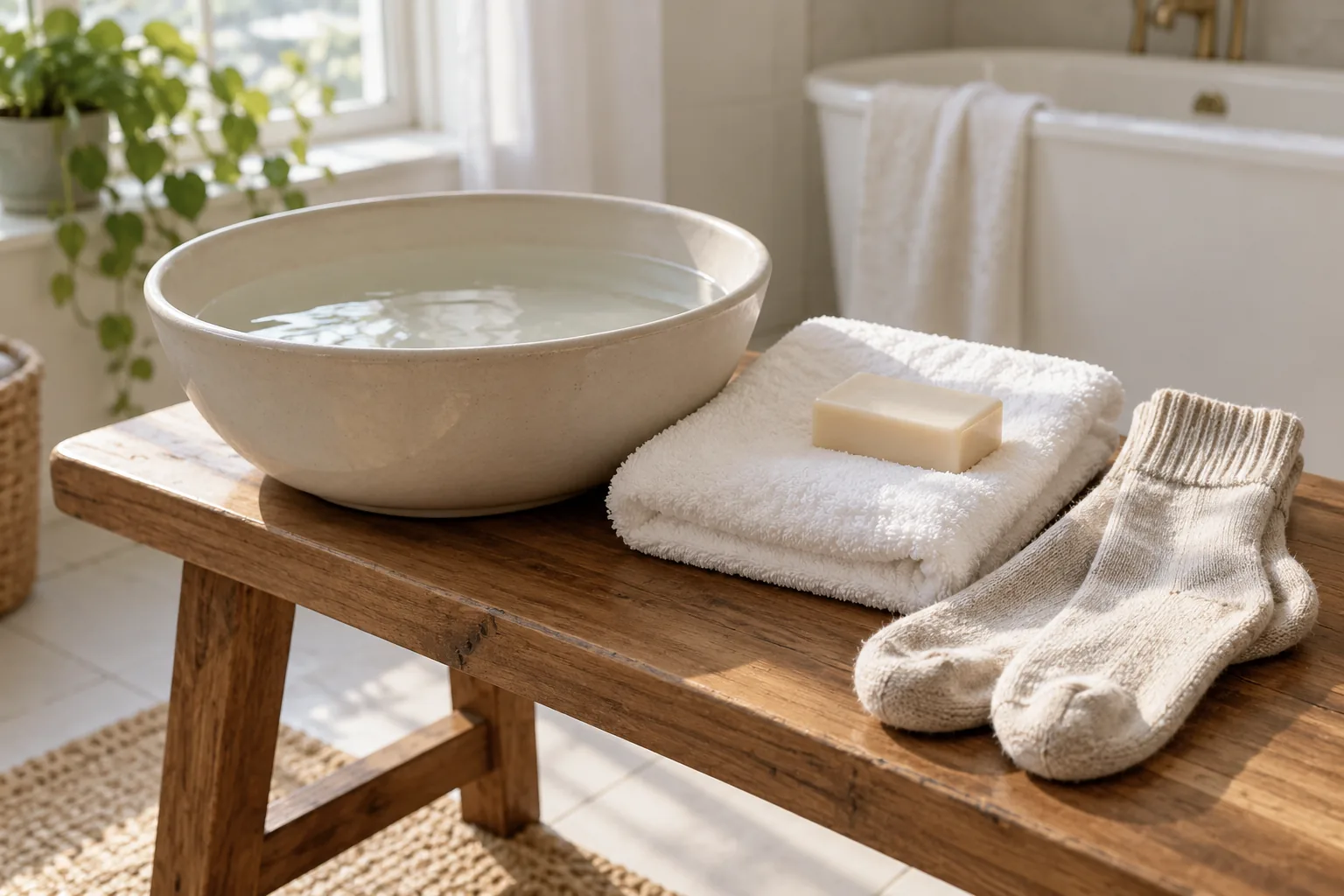
Wash feet daily in lukewarm, not hot, water — test the temperature with your elbow or a thermometer rather than your foot if sensation is reduced, since scalding is a real risk when feet can’t feel heat accurately. Use a mild soap, and avoid long soaks, which can soften and weaken the skin. Dry thoroughly afterward, paying particular attention between the toes, where trapped moisture is one of the most common starting points for fungal infections and skin breakdown.
Moisturising Without Overdoing It
Dry, cracked skin is an easy entry point for infection, so a daily moisturiser on the tops and soles of the feet is worth the habit. The exception is between the toes: keep that area dry rather than moisturised, since extra moisture there tends to encourage fungal growth rather than prevent cracking. A thin layer is enough — feet don’t need to feel greasy to be protected.
Toenails: When to Do It Yourself and When Not To
Trim nails straight across, not curved into the corners, and file rather than cut any sharp edges. If nails are thick, brittle, curved, or hard to reach — or if you’ve been told you have poor circulation or reduced sensation in your feet — a podiatrist should handle nail care rather than doing it at home. A small nick that would be a non-event for most people can become a serious wound when healing is slow and sensation is unreliable.
Socks and Shoes, Every Time You’re Upright
Never go barefoot, including indoors — a step on an unseen object is one of the most common ways an unnoticed injury starts. Seamless, non-binding socks reduce pressure points, and well-fitting shoes with a wide toe box and firm heel protect against the rubbing that causes blisters in the first place. Shake shoes out and run a hand around the inside before putting them on, since a small object or a worn-through lining can sit there unnoticed.
Building It Into a Routine You’ll Actually Keep
The checklist that works is the one that survives a busy week. Most people find it easiest to attach the check to something they already do daily — right after a shower, or while putting on socks in the morning — rather than treating it as a separate task to remember. A phone reminder for the first month or two helps it become automatic.
A Habit Worth Building
None of this prevents neuropathy itself, and it won’t reverse nerve damage that’s already there. What it does is close the gap between “something small happened” and “someone noticed” — which, for feet that can’t always feel trouble coming, is most of what good foot care actually is.
See Neuropathy No More →
Frequently Asked Questions
How long should the daily check take?
About five minutes once it’s a habit. A mirror or a phone photo for the soles speeds it up considerably.
What if I find a blister or cut?
Clean it gently, cover it, and contact your doctor or podiatrist the same day, even if it looks minor. With neuropathy, wounds that seem small can worsen quickly without pain to warn you.
Do I really need to check my feet if nothing hurts?
Yes — that’s exactly the point. With reduced sensation, the absence of pain doesn’t mean the absence of a problem.
What to Read Next
- Best shoes for neuropathy: what to look for
- Best socks for diabetic neuropathy
- When to see a doctor about numb feet
- Neuropathy No More review
Affiliate & medical disclosure: Some pages on this site contain affiliate links; if you buy through them we may earn a commission at no extra cost to you. This article is educational only and not medical advice. See our affiliate disclosure and medical disclaimer.