
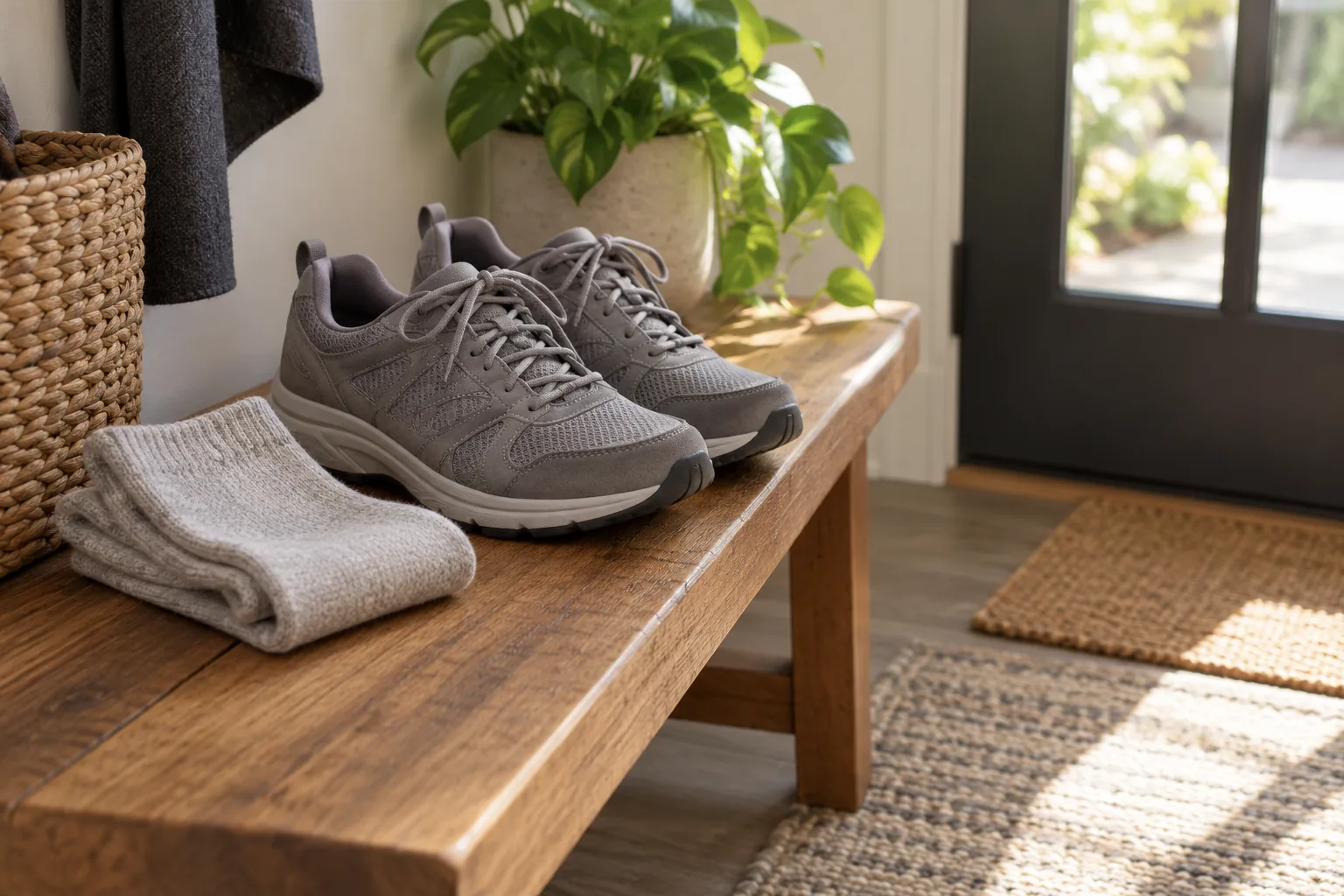
Compression Socks for Neuropathy
Disclosure: this page contains affiliate links (ClickBank and Amazon). If you buy through them we may earn a commission at no extra cost to you. As an Amazon Associate we earn from qualifying purchases. Educational content only, not medical advice.
If your doctor has cleared you, mild graduated compression (8–15 or 15–20 mmHg) is where most people start. The link opens Amazon filtered to those.
See 15–20 mmHg compression socks →Compression socks and neuropathy are an awkward pair. Compression can genuinely help people whose feet and ankles swell by evening, and swelling makes shoes rub and feet ache. But compression works by squeezing the leg, and in someone whose arteries are narrowed, which is common in diabetes, that squeeze can starve the foot of blood. With reduced sensation you may not feel the warning signs. So this is the one sock purchase where a quick check with your doctor comes before the shopping.
If you’re not sure you need compression at all, you probably want ordinary diabetic socks instead: non-binding, seamless and cushioned.
When compression can help
- Swollen ankles and feet by the end of the day (oedema), once the cause has been checked.
- Varicose veins or venous insufficiency, often recommended by a doctor.
- Long periods of sitting, such as travel, if your doctor agrees.
Compression does not treat the neuropathy itself. It can make feet more comfortable and footwear fit better, which indirectly protects the skin.
Pressure levels explained
| Pressure | Typical use | Watch out for | Shop |
|---|---|---|---|
| 8–15 mmHg (mild) | Tired legs, a gentle start, mild swelling | May do little for significant swelling | Amazon |
| 15–20 mmHg (moderate) | Everyday swelling, travel | Needs a doctor’s OK if you have diabetes | Amazon |
| 20–30 mmHg (firm) | Venous disease, under medical advice | Hard to put on; not for self-prescribing | Amazon |
| Compression sock donning aid | Stiff hands, back or hips | Practise seated | Amazon |
We link to Amazon search results rather than single products so you can compare current options and prices, which change often.
What to look for in the sock
- Graduated pressure, tightest at the ankle and easing up the leg.
- A seamless or flat toe, the same rule as any sock for numb feet.
- Correct sizing by measurement, ankle and calf, taken in the morning before swelling builds. Shoe size alone isn’t enough.
- A top band that doesn’t dig in. A tight band can act like a tourniquet. Wide-calf versions exist.
- Light colour if possible, so you’d see any drainage.
Putting them on and wearing them
- Put them on in the morning, before your feet swell.
- Turn the sock inside out down to the heel, slide your foot in, then roll the rest up. A donning aid or rubber gloves make this far easier.
- Smooth out every wrinkle; a fold can press as hard as a seam.
- Take them off at night unless your doctor says otherwise.
- Check your feet and the skin under the top band every evening.
Compare seamless compression socks →
Our take
Compression is useful for the right person and risky for the wrong one, and a short test at your doctor’s tells you which you are. If you get the all-clear, start mild, measure properly, and treat any new mark on your foot as a reason to stop and ask.
See Neuropathy No More →
Frequently Asked Questions
Are compression socks good for diabetic neuropathy?
They don’t treat neuropathy. They can help swelling, but only once a doctor has confirmed your circulation is good enough.
Can I sleep in compression socks?
Usually not. Lying down removes the need for compression, and wearing them overnight adds pressure without benefit unless your doctor advises it.
What’s the difference from diabetic socks?
Diabetic socks avoid squeezing the leg. Compression socks squeeze on purpose. Most people with neuropathy need the first; some also need the second.
What to Read Next
- Best socks for diabetic neuropathy
- Neuropathy vs peripheral artery disease
- Best shoes for neuropathy
- Neuropathy No More review
Affiliate & medical disclosure: This page contains affiliate links. As an Amazon Associate I earn from qualifying purchases; we may also earn from ClickBank links, at no extra cost to you. Educational content only; not medical advice. See our affiliate disclosure and medical disclaimer.
How we reviewed this (updated 16 October 2026): this page is based on the vendor’s official information, pricing and policies and on public user feedback. We have not hands-on tested the products listed.